Front Yard Sod Installation at a DeLand Home
Why kill the old lawn instead of sodding over it?
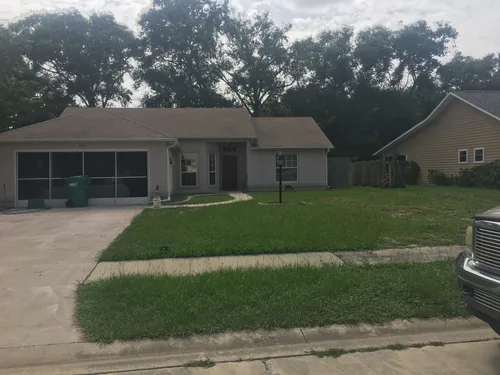
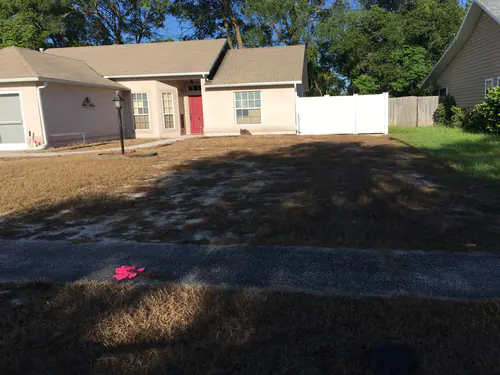
Because whatever lives in the old lawn comes straight back through the new one. The front yard on this DeLand ranch was more weed than grass, with bare sand showing through in patches and a mix of species that had been fighting each other for years. Laying fresh sod on top of that buys you roughly one season. Dollarweed and sedges push up through the seams, and now you have paid for sod and still own the same yard. So it came out. The second photo is that lawn after the existing turf was killed and stripped, which is the least photogenic day of any sod job and the one that decides how the finished lawn looks two years later. Everything after this is straightforward. Grade it, sort the sprinkler heads, lay the pallets. Skipping this step is the single most common reason a sod installation disappoints somebody twelve months on.
What does the prep work actually involve?
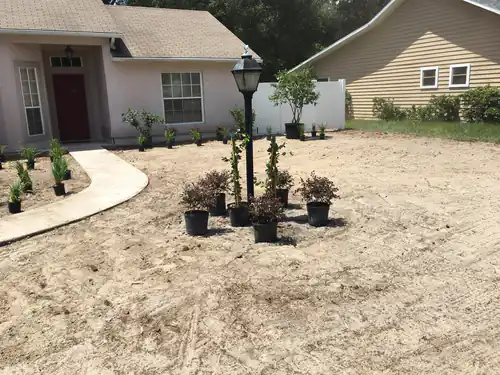
Grading, and a lot more of it than you would think. Once the old turf is gone you are finally looking at the true shape of the yard, and on this lot that meant pulling the surface back to a consistent grade running slightly away from the slab and finishing flush with the front walk. Flush matters. Sod laid proud of a walkway gets scalped every time the mower crosses it, and sod laid low collects water and stays soggy. You can see the finished grade in the third photo along with the shrubs staged in their pots exactly where they were going in, which is how we lay a bed out before anything is planted. Standing the pots up first is worth the extra half hour every time. Spacing reads completely differently in the ground than it does on a plan, and sliding a pot two feet left beats digging a plant back up.
Which sod holds up best in DeLand sand?
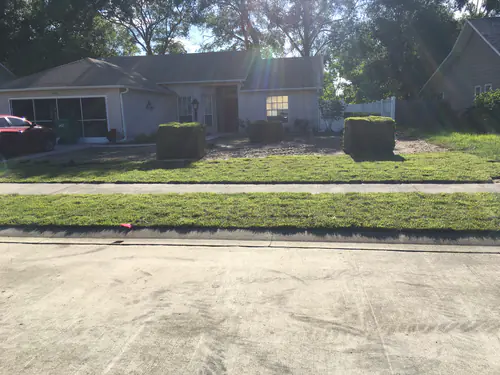
Bahia if the yard is open and you want low input, St. Augustine if you want the thick carpet look and have irrigation to back it up. That is the honest version of a question people expect to be complicated. Argentine bahia roots deep, shrugs off drought, tolerates poor sandy soil, and it will look stalky if you were picturing a manicured lawn. Floratam and the other St. Augustine cultivars give you the dense blue green turf most homeowners have in mind, and they will punish you the moment the irrigation stops working. Shade changes the answer again, because bahia will not hold under a canopy. One rule applies either way. Sod is perishable. It is cut, stacked on a pallet and starts heating immediately, so it needs to go down and get watered the day it arrives rather than the following weekend. Roeling Green Lawns schedules delivery for the morning of the install, and the bahia sod installation in Port Orange shows how that plays out on a bigger lot.
How do you water new sod under Volusia County restrictions?
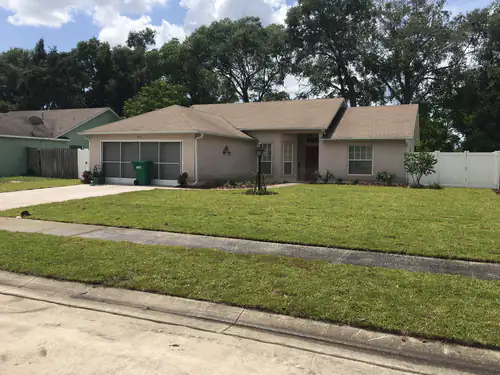
With the establishment allowance, which most homeowners do not know exists. Volusia County sits inside the St. Johns River Water Management District, and the standing landscape irrigation rule limits established lawns to two days a week during daylight saving time and one day a week the rest of the year. New sod is treated differently. The district allows a much heavier schedule through the establishment period right after installation, which is the only way new turf survives its first month in Florida sand. Confirm the current day and duration limits with the county or the district before you start, because these rules do get adjusted. What matters in practice is the first ten to fourteen days. Keep it wet, never let a seam dry out and curl, stay off it, and hold the mower until the roots have knit into the soil underneath. The last photo is this yard once it filled in, and keeping it that way is ordinary landscaping and irrigation work. There is more of it in our completed projects.
A closer look
Is your DeLand front yard more weeds than grass?
Call us at (321) 436-1675 for a free measure, honest advice on bahia versus St. Augustine, and sod that goes down the day it arrives.