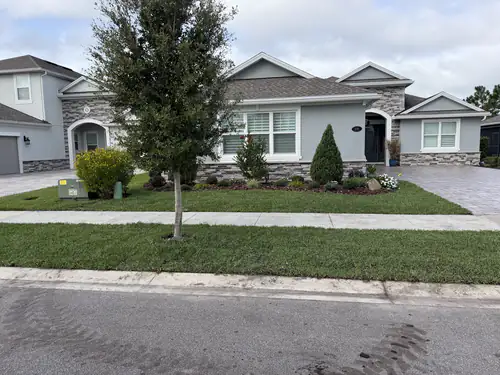
Sod Installation in Central Florida
Our sod installation starts with the dirt: the old lawn comes out, the grade gets fixed, and fresh sod goes down the morning it's delivered. We lay bahia, Floratam and CitraBlue across Volusia, Lake and Seminole counties, and we'll tell you honestly which one your yard can keep alive.
When does a lawn need new sod instead of more water?
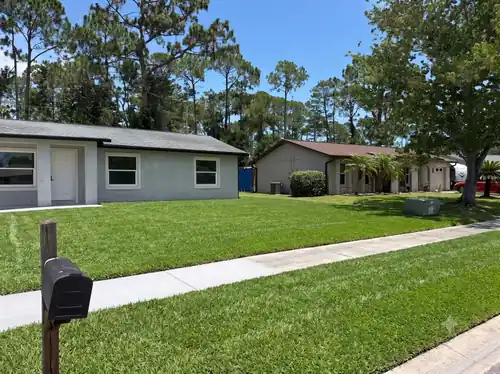
When the grass is dead at the runners, or when the weeds have won. Brown blades alone don't mean much. St. Augustine goes straw colored in a dry spell and greens back up once it gets water, as long as the stolons crawling across the soil are still alive. So the first thing we do on a sod estimate is pull up a runner and look at the nodes. Green and firm means wait and water. Dry and brittle means that lawn is finished, and no amount of fertilizer will bring it back.
The other case is a yard that's more dollarweed and sedge than turf. Laying fresh sod over that buys you roughly one season before the weeds push up through the seams. St. Augustine can't be reseeded either, and plugging a whole yard means a year of bare sand between the plugs. At Roeling Green Lawns, we'd rather tell you a lawn can be saved than sell you pallets you don't need.
What prep work happens before the sod goes down?
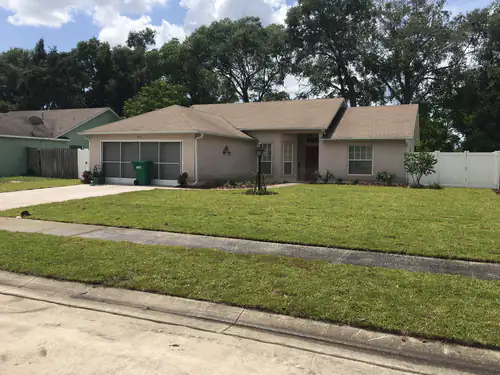
Most of it. The old turf gets killed and stripped, the ground gets graded, and every sprinkler head gets reset before a single piece of sod arrives. On bigger yards the stripping is done with a compact track loader, because rubber tracks spread the weight and don't rut a lawn the way tires do. We flag the sprinkler heads first so the blade stays clear of them.
Grading is the step people underestimate. The finished surface should run slightly away from the slab and sit flush with the walks and driveway. Sod laid proud of a walkway gets scalped every time the mower crosses it. Sod laid low holds water and stays soggy through the summer rains. You can see how that plays out on our front yard sod installation in DeLand, where the stripped yard was graded flush to a brand new curved walk. That stripped, bare sand stage is the least photogenic day of the job, and it's the one that decides how the lawn looks two years later.
Which sod grows best in Central Florida sand?
Bahia for open, sunny yards where you want low upkeep. St. Augustine for the thick carpet look, as long as there's irrigation behind it. Argentine bahia roots deep, handles drought and poor sandy soil, and looks a little stalky next to a manicured lawn. Floratam is still the workhorse St. Augustine in Volusia County, and it's a solid grass in full sun, but it thins out fast under oaks and along the shady side of a house.
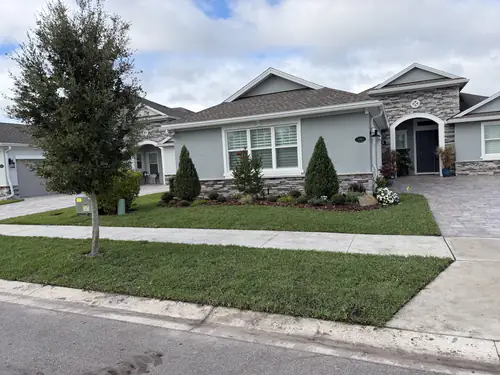
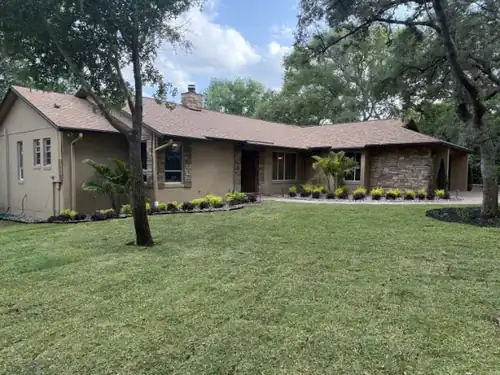
That's where CitraBlue earns its place. It's a St. Augustine cultivar developed through the University of Florida, with a deeper blue green color and a tighter, more compact look than Floratam, and it holds up better in partial shade. We laid it on a Citra Blue sod installation in Victoria Park that ran from the curb to a pond. For a sunny lot on a budget, the bahia sod installation in Port Orange is the better comparison. Neither St. Augustine forgives a broken irrigation zone.
How is new sod laid so the seams disappear?
Tight, staggered, and fast. Sod starts heating on the pallet the moment it's cut, so we schedule delivery for the morning of the install and lay it that same day rather than letting it sit on a driveway over a weekend in the August heat. Seams get staggered like brickwork. That way water has no long straight line to run down. Every edge gets butted tight, because a gap dries out, curls, and browns before anything else in the yard.
Pieces get cut clean around the driveway and the beds. No stuffing. On a lot that slopes toward a pond, the lawn follows the natural grade and the seams run across the slope, not down it. Once it's all down, the sod gets rolled to press the roots into the sand and watered in right away. On the Port Orange job, the seams had vanished completely by the three month photo.
How do you water new sod under Volusia County rules?
Heavily for two weeks, using the establishment allowance, then back to the normal schedule. Volusia County sits inside the St. Johns River Water Management District. The standing rule limits established lawns to two watering days a week during daylight saving time and one day a week the rest of the year. New sod is treated differently, with a heavier schedule allowed while it establishes. Confirm the current days and limits with the county or the district before you start, because these rules do get adjusted.
For the first ten to fourteen days, sod sits on the sand without gripping it, so keep every piece wet and never let a seam dry out. Early morning is the best time to water. After two weeks, tug a corner. If it resists, the roots are down and you can start stretching the time between waterings. First mowing comes after that, set high. A sprinkler system that actually covers the whole yard makes all of this easier, which is why so many of our sod jobs include irrigation installation and repair alongside the new lawn.