Large Live Oak Removal With a Bucket Truck in DeLand
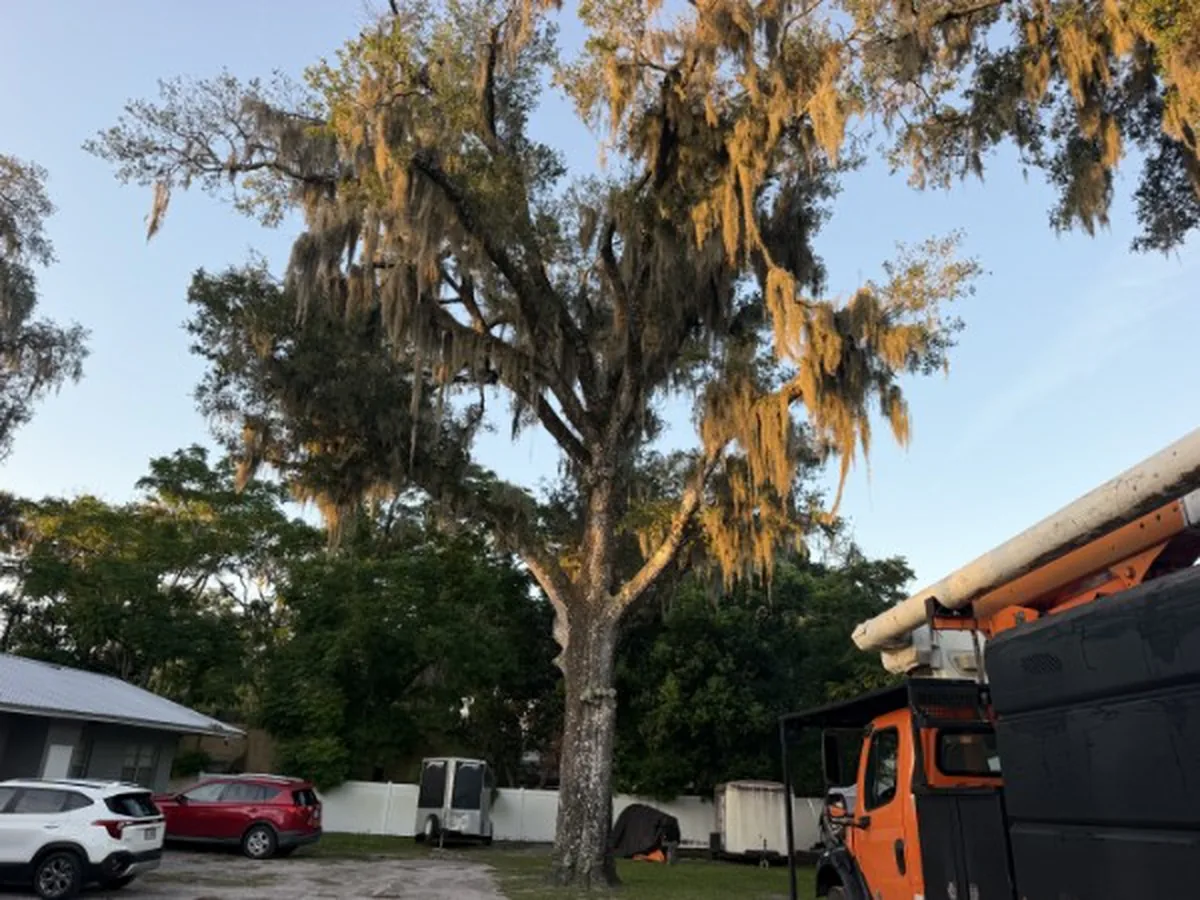
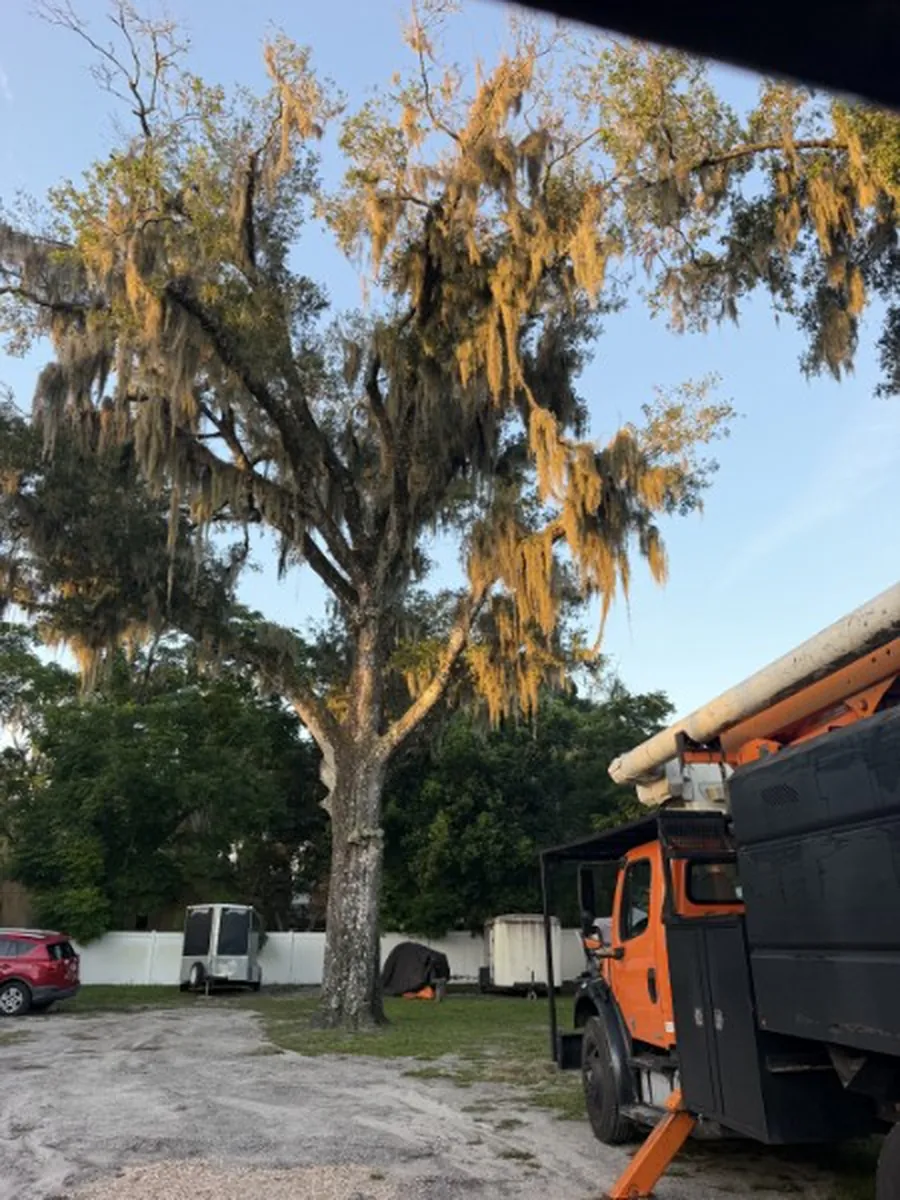
Why did this DeLand live oak have to come down?
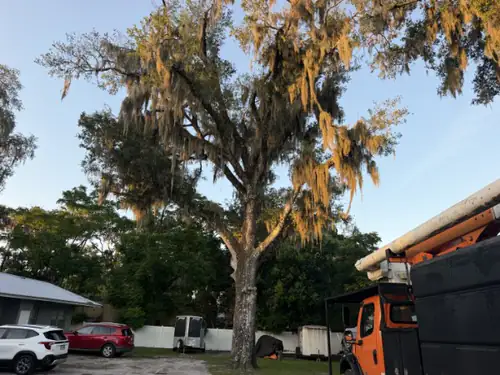
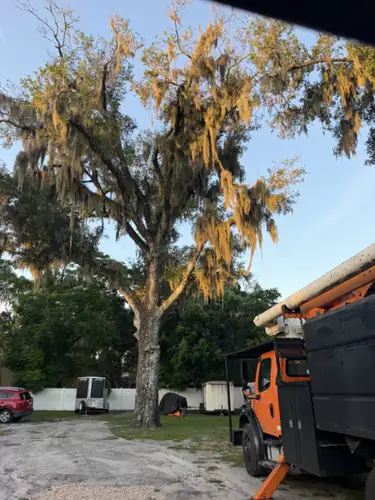
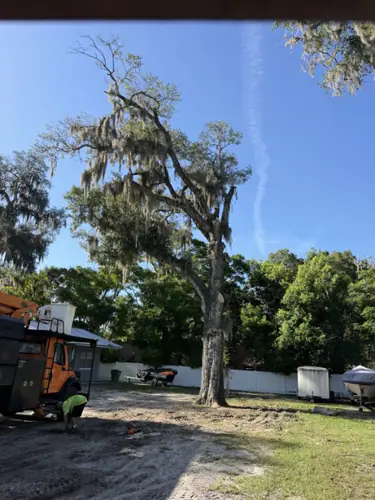
The top of it was already dead. From the driveway this read as a healthy shade tree, a big live oak loaded with Spanish moss, the kind DeLand is full of in the older neighborhoods off Woodland Boulevard. Look at the crown, though: the highest limbs are bare and gray while the canopy underneath them is still green. A live oak dying back from the top is telling you something about its roots or its trunk, and it rarely reverses on its own. The moss did not do it. Spanish moss is an epiphyte, so it lives on a branch without feeding off it, but a thinning canopy lets in more light and the moss thickens in response. It also mattered where this tree stood. The owner keeps boats, enclosed trailers, and vehicles parked across the lot, and a dead limb out of a crown that high does real damage on the way down. That is when Roeling Green Lawns got the call, and it is a common one for our tree service in DeLand.
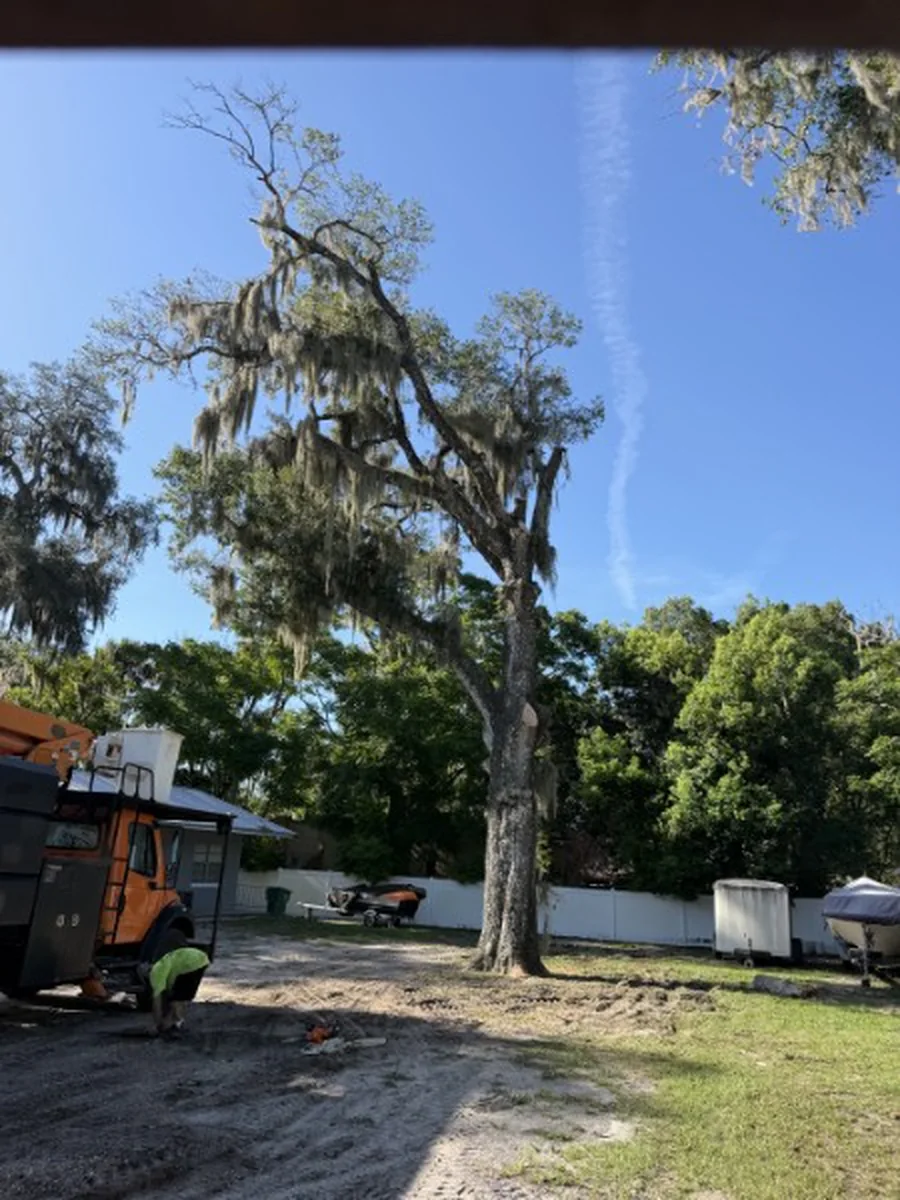
How do you drop a tree this big with boats parked under it?
You take it apart in pieces, and you never let a piece pick its own path. By the time this photo was taken, roughly half the canopy was gone, and it was the half that reached over the building and the parking pad. We work that side first on purpose. Clearing the limbs above anything valuable early means the rest of the day happens over open ground. The trailers and the boats along the fence line stayed exactly where they were. Moving somebody else's boat is its own liability, so we would rather rig around it than shuffle it. Every limb over the fence came off on a rope and got lowered under control. Our groundman, in the green hi-vis shirt near the truck, kept the drop zone clear and fed brush into the chipper as it came down, which stops the ground filling with limbs the crew then has to climb over. Controlled tree removal is mostly sequencing. Cut in the wrong order and you spend the afternoon working around your own mess.
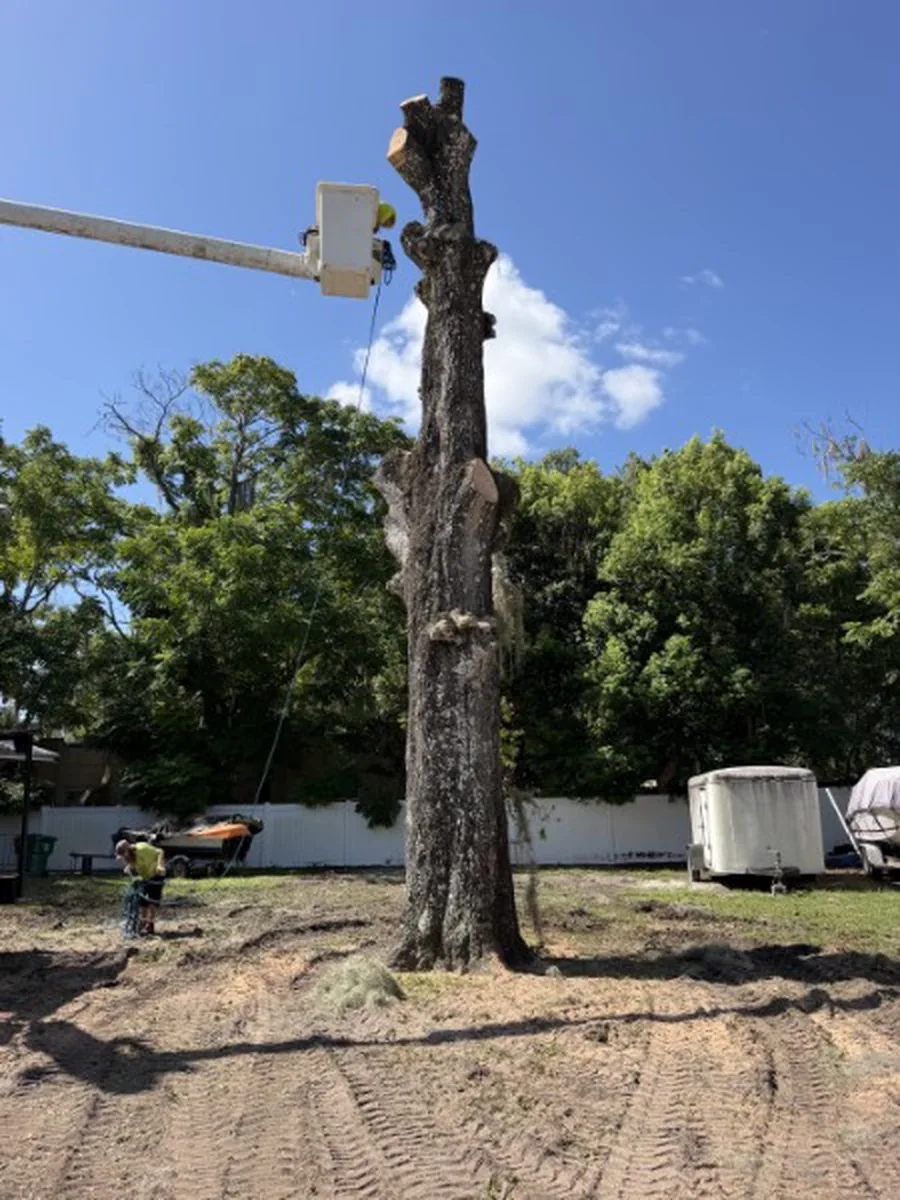
Why use a bucket truck instead of climbing it?
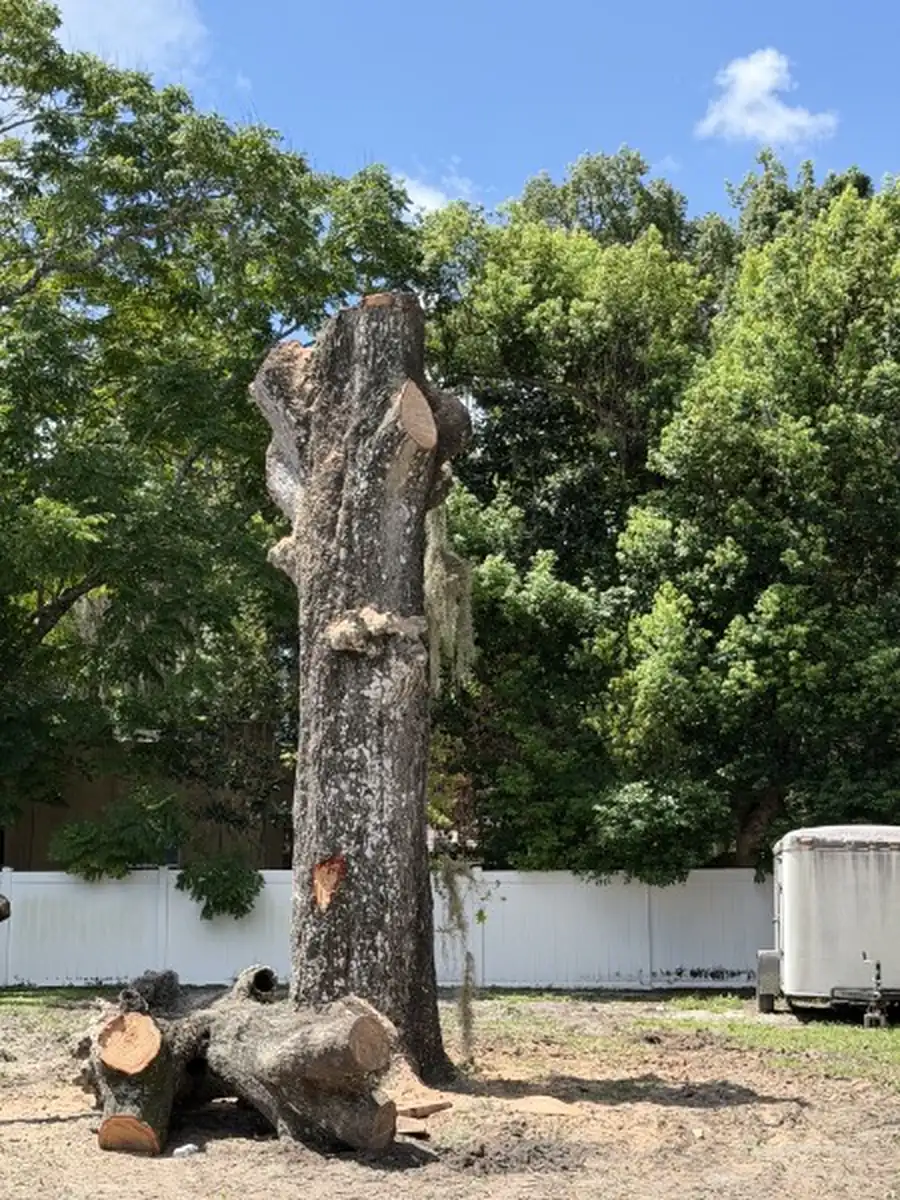
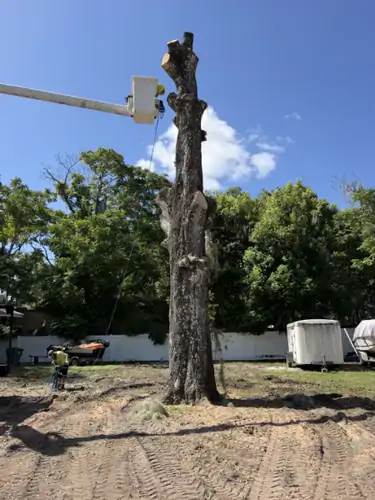
Because nobody should tie into wood that is already dying. A climber's rope, lanyard, and body weight all end up loaded onto limbs, and on a declining live oak with deadwood in the crown you cannot fully trust what those limbs will hold. The bucket takes that question off the table. Here the tree is down to a bare spar and the operator is working from the basket, cutting the stem in short lifts with a rigging line running to the ground crew. One thing that does not show up in the photo: the ground is sand. Outriggers sink. We set pads under the feet before the boom ever came up, because a truck that settles two inches while the operator is sixty feet up is not a small problem. Sandy Volusia County soil is easy to dig in and unforgiving to park heavy equipment on. It is also part of why plenty of mature trees out here sit on shallower root plates than people expect.
What does DeLand require before you remove a tree?
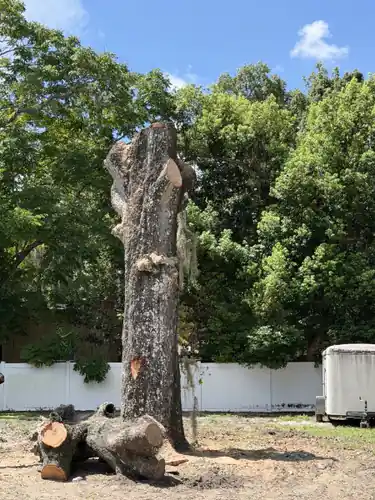
A permit in most cases, and sometimes an inspection before a saw ever comes out. Tree removal permits in DeLand go through the city's Public Works Department, and a protected or specimen tree gets looked at by the City Forester before the permit is issued. Size is usually what decides it. The city measures diameter at breast height, four and a half feet up from the ground, and specimen trees approved for removal have to be replaced with enough new trees to add back half the diameter that came out. That last part catches people off guard. A property owner budgets for the removal and does not budget for the replanting. We would rather walk a client through that before the job is scheduled than after. On a tree like this one, where the crown was already failing, its condition is a big part of the conversation with the city. By this stage the spar was down to the last stretch above the stump, with the first heavy sections already on the ground.
What did the wood look like once it was on the ground?
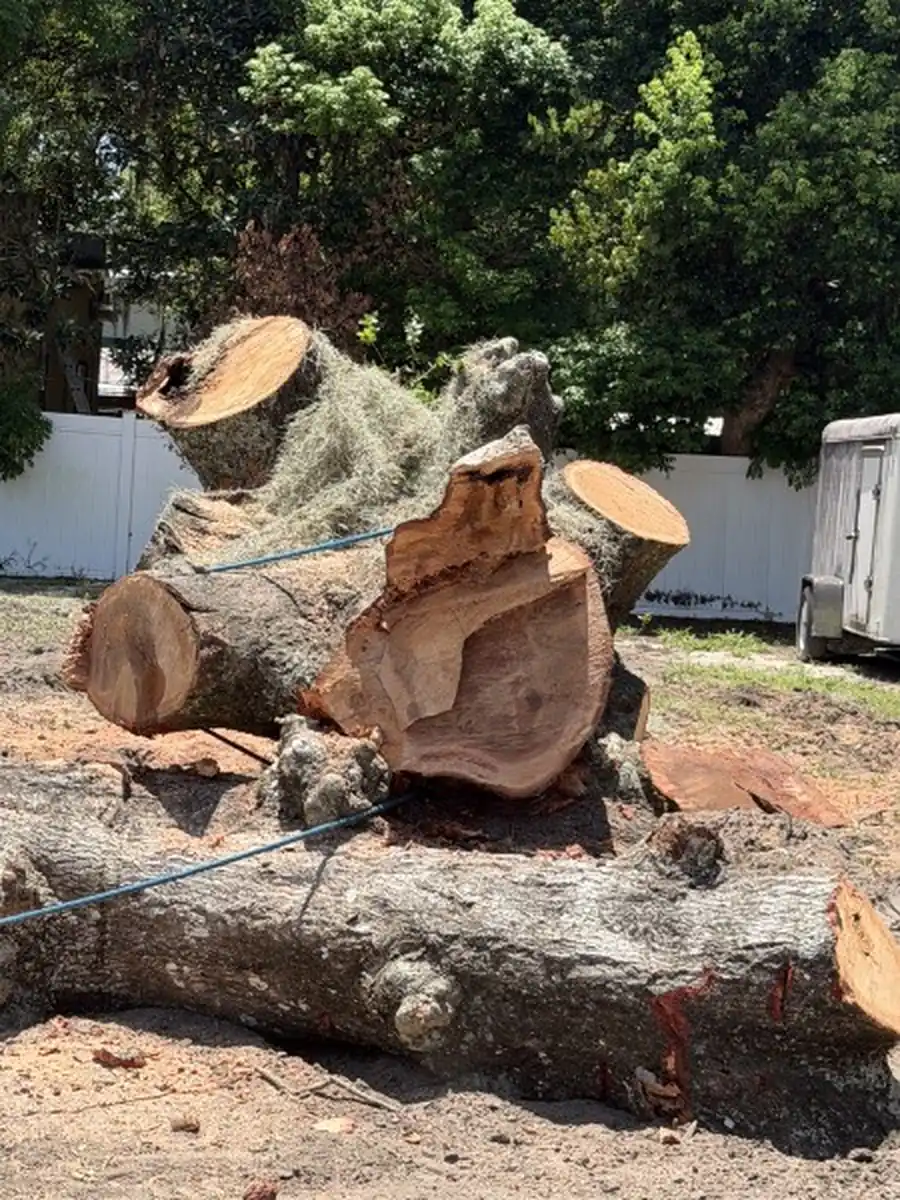
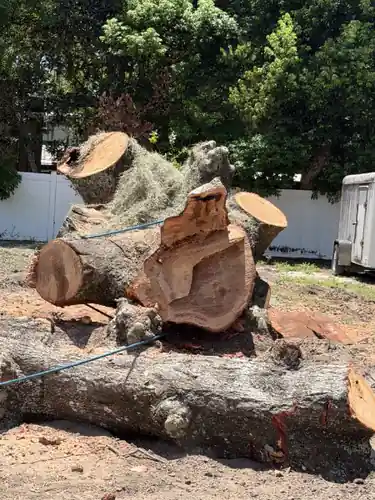
Worse than it looked standing up. The cut faces tell the story the bark was hiding. Look at the large face in the middle: the wood runs discolored and irregular through the center instead of clean and even the way sound oak should. That is decay working its way up the stem. It explains the dead limbs at the top, and why nobody on this crew wanted to climb it. Trees like this do not announce themselves. They stand there looking enormous and permanent right until a summer storm finds the weak spot. The blue rigging line is still threaded through the pile because we were partway through load out. Everything got cut to a size the truck could carry, and the moss, brush, and chips left with it. No pile by the fence. If you have a big one that has started dropping limbs or thinning at the top, we will come look at it for free. There is more of this work across the rest of our completed projects.
A closer look
Is a big tree on your DeLand property thinning out at the top?
Call us at (321) 436-1675 for a free look at it, a fully insured removal, and every log and limb hauled off before we leave.