Backyard Oak Removal Beside a Shed in DeLand
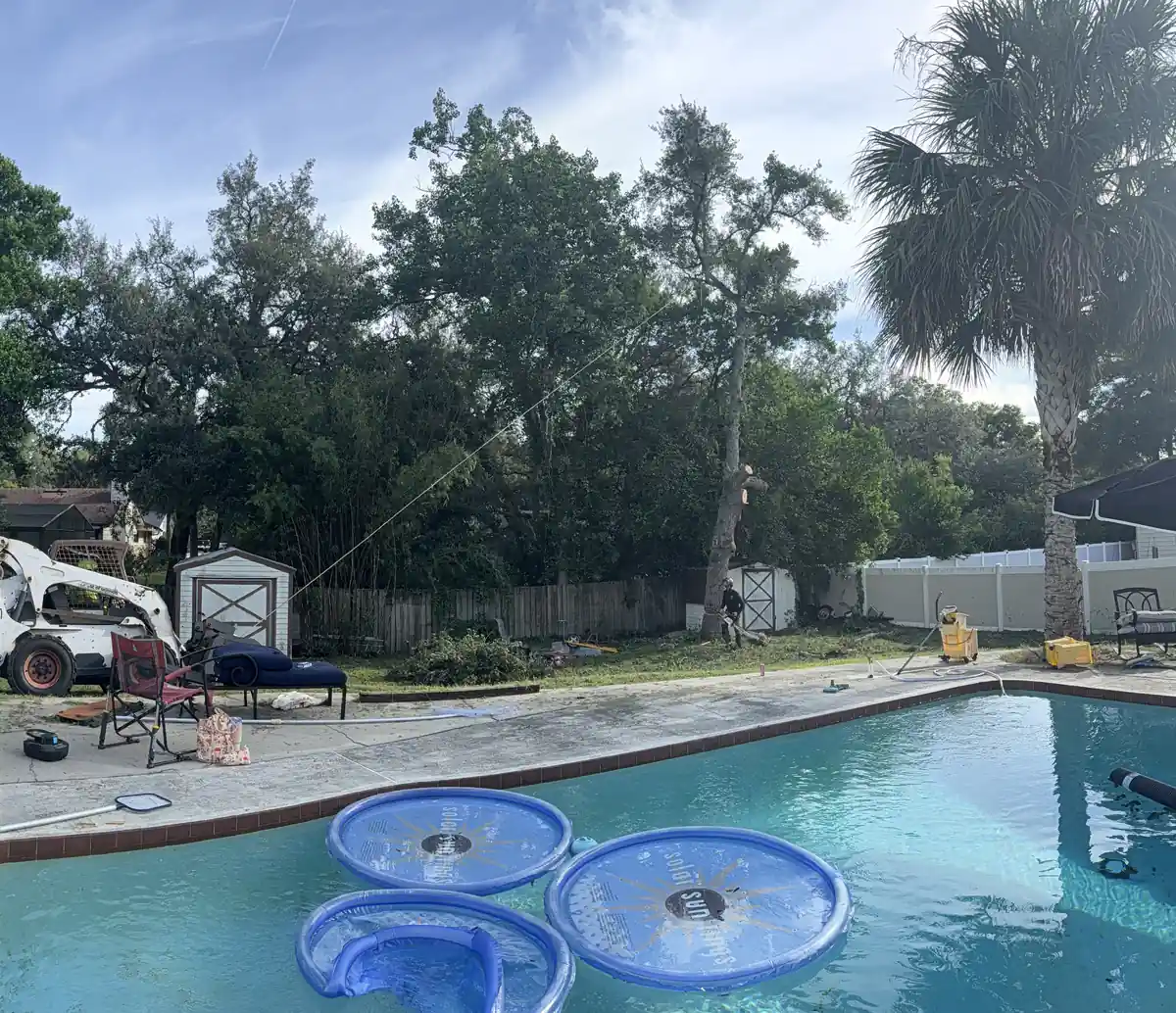
Why did this DeLand backyard oak have to come down?
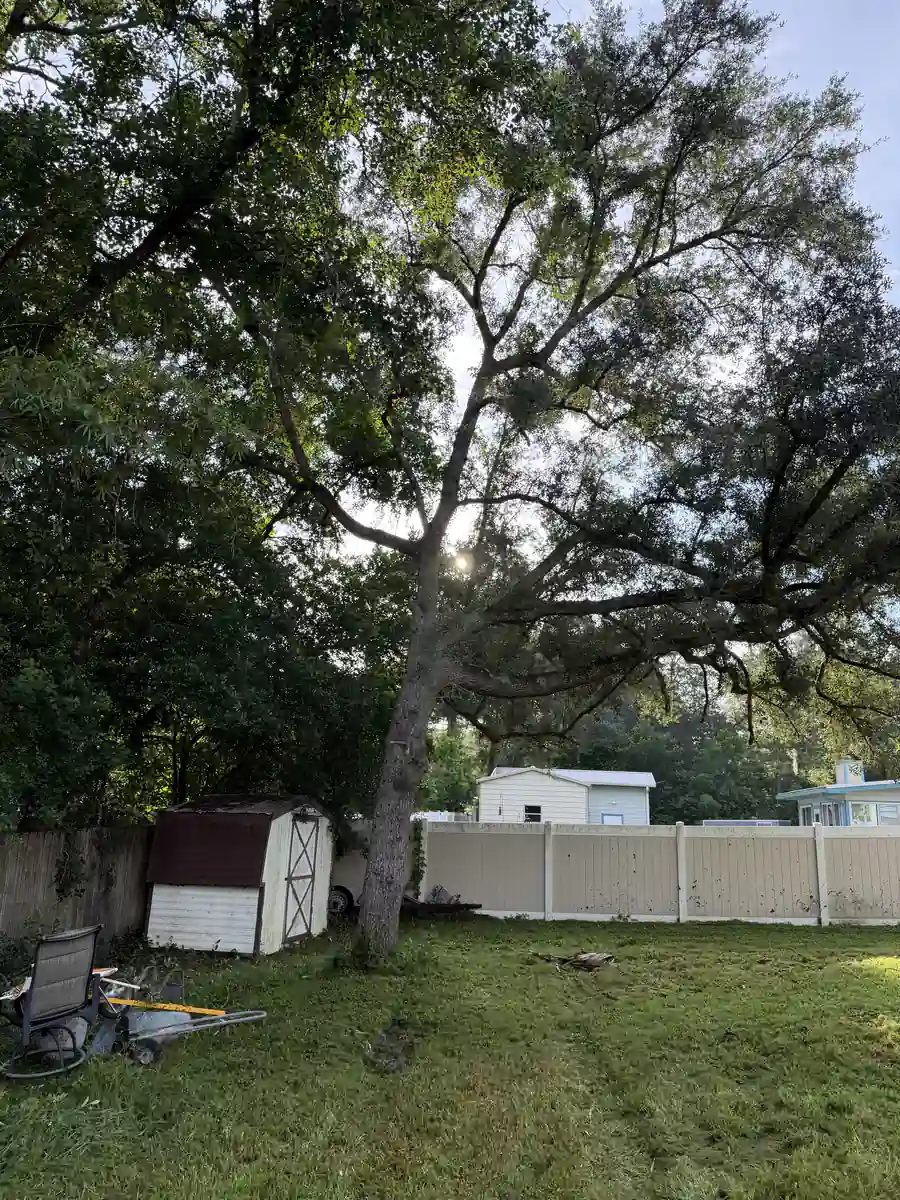
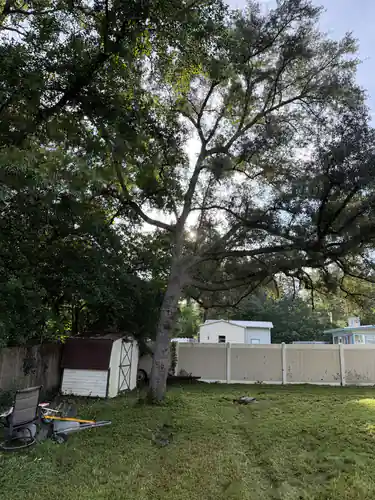
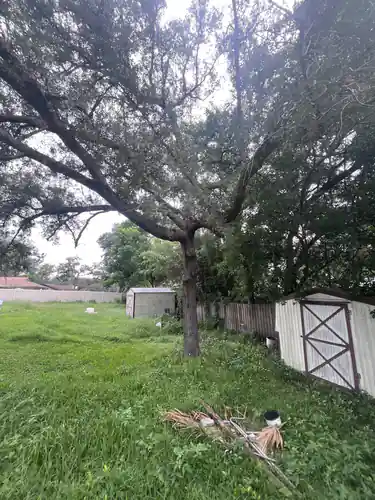
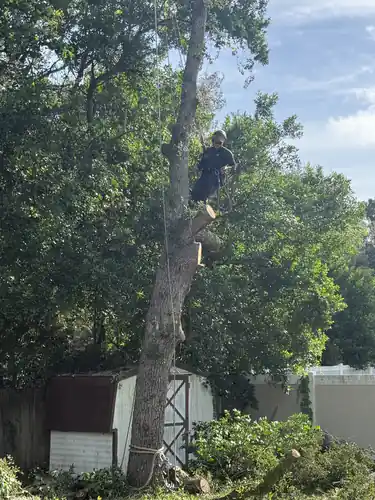
Because it was leaning the wrong way. This oak sat in the back corner of a DeLand yard, and the trunk had spent years reaching toward the open lawn, which put its heaviest leaders directly over the homeowner's metal storage shed and the fence line behind it. You can see the lean clearly in this photo. The trunk runs up at an angle and nearly every major limb hangs off the same side of it, so the weight is not sitting balanced over the root plate the way it would on a tree that grew out in the open. Spanish moss had filled the lower canopy, which adds nothing structurally but does hold water weight in a summer storm. The shed underneath is thin sheet metal on a wood frame. One leader failing puts a hole through that roof and probably takes the fence with it. The homeowner called Roeling Green Lawns after finding small limbs on the shed roof following a storm, which is usually the first warning a tree gives you. We get this call constantly on tree service in DeLand jobs.
How much of a problem is a leaning oak in a small backyard?
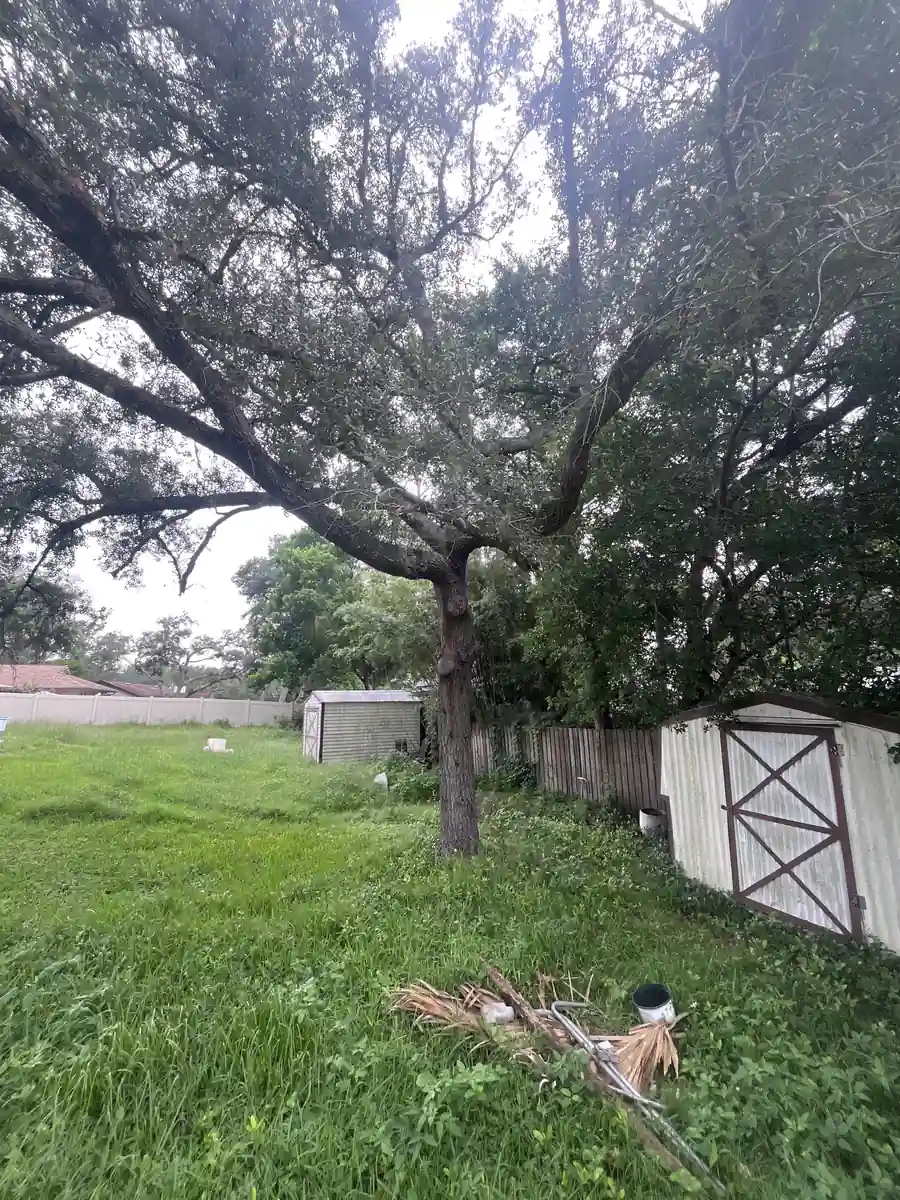
More than most people expect, because in a yard this size the fall zone is basically the whole property. From this side you get the honest view. The trunk leans toward the shed, a wood privacy fence runs down one property line, and a white vinyl fence runs down the other, so there is almost nowhere for a limb to land that does not cost somebody money. Vinyl is the worst of it. Those panels crack instead of bending, and matching an existing panel years later is mostly luck, so one hit turns into replacing a whole run. Sandy Volusia County soil is the other half of the problem. Sand holds a root plate loosely compared to clay, which means a tree already leaning has less to push back against when a gust loads one side of the canopy. Nothing about this tree was dying. It was just pointed at the shed.
Why climb the tree instead of bringing in a bucket truck?
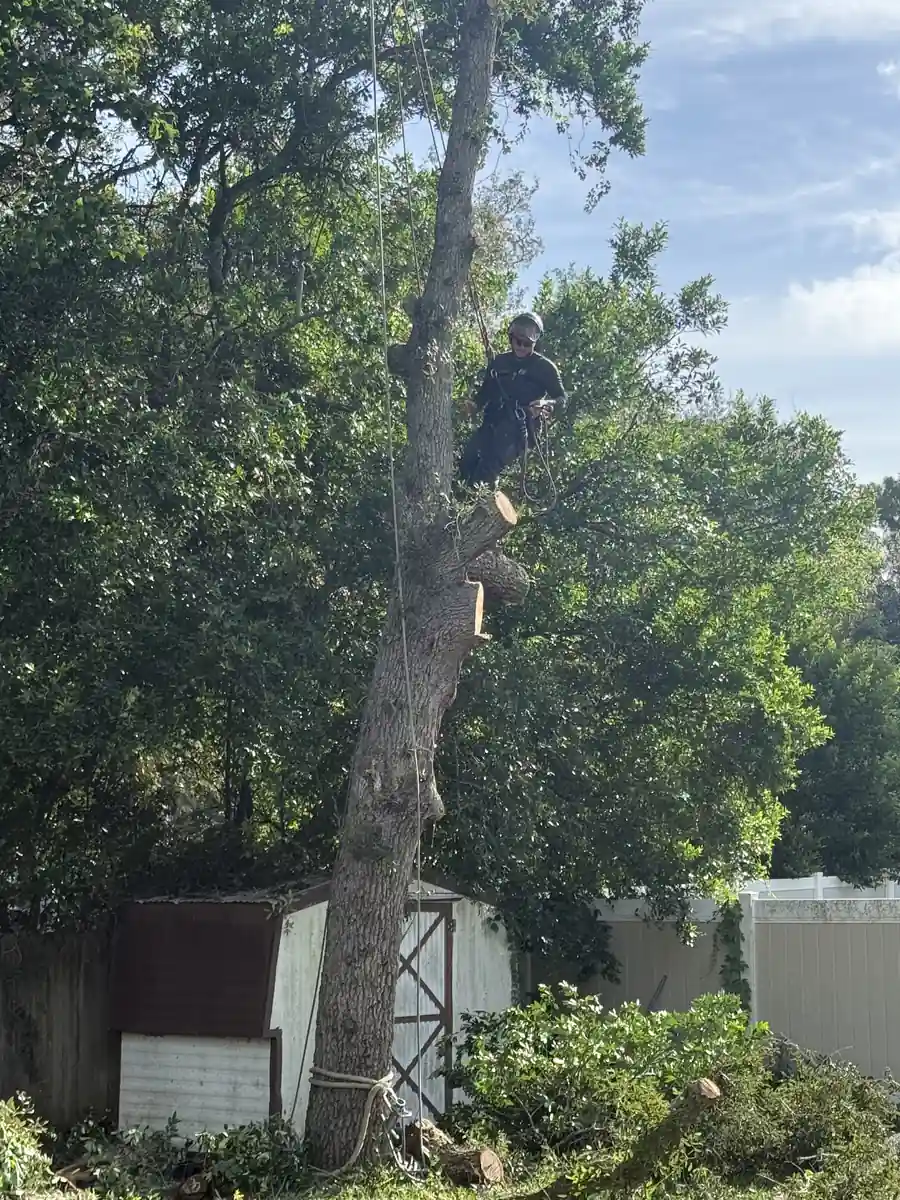
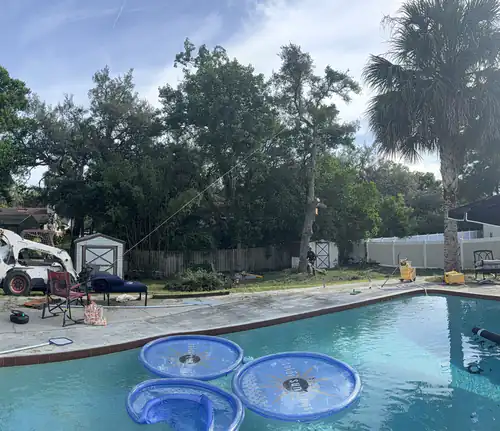
Nothing with wheels was getting into that backyard. The only route in ran through a side gate, past the pool deck, along the narrow strip between the house and the fence. A bucket truck needs room to set outriggers and a clean approach to the canopy, and there was neither, so this became a climbing job. Our climber tied in above the work, went up the stem on his climbing line, and took the tree apart from the top down with the saw clipped to his saddle. That second rope running through the canopy is the rigging line. Nothing came off this tree in free fall. Every piece got tied, cut, and lowered by the groundman standing underneath, which is what keeps a limb from swinging into the shed on its way down. We kept the pieces small on purpose, since big wood only saves time when there is open ground to drop it on. A rigged tree removal in a back yard runs longer than the same tree standing out front. Worth knowing before you compare two quotes that look different.
How do you get a tree out of a fenced backyard without wrecking the lawn?
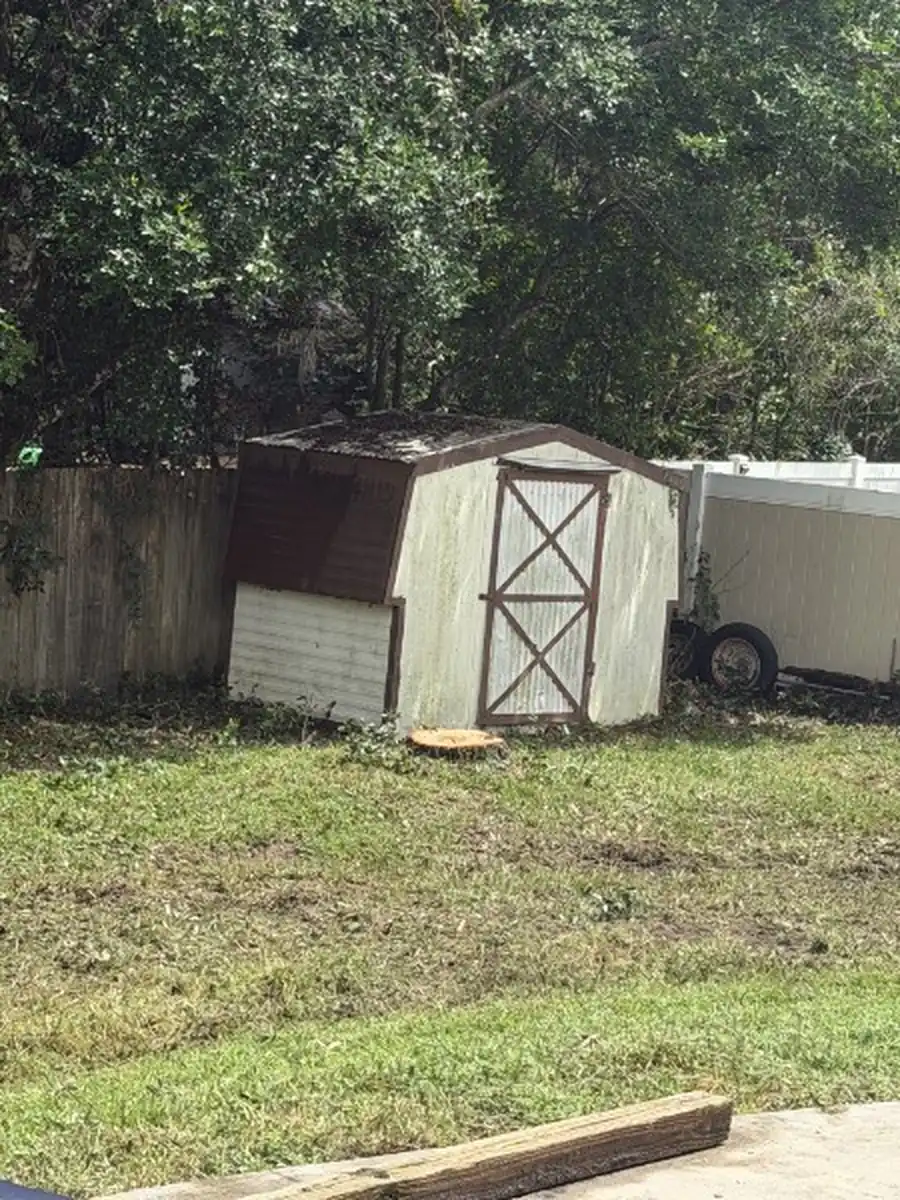
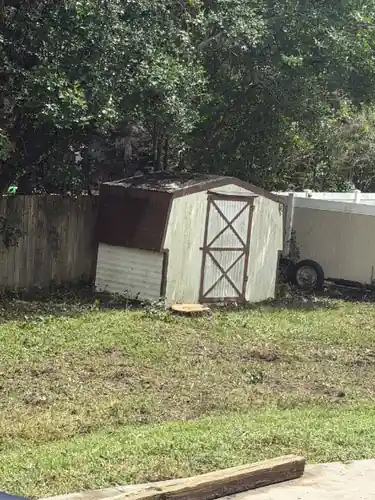
On foot, mostly. Every limb off this tree got dragged by hand across the grass and out to the chipper at the curb, because that side gate was the only way in or out. The skid steer you can see parked across the yard in the wide shot took the heavy trunk sections once the canopy was down and there was finally room to turn it around. Look at the shed in this photo. It is wearing the same roof it had that morning, and the fence panel beside it never got touched, which is the entire reason a crew bothers rigging a tree instead of felling it. We raked the yard out before we left. One round of trunk wood stayed in the grass because the homeowner wanted it. If you have an oak that only threatens one structure, ask about tree trimming before you commit to a full removal, since pulling weight off the leaning side can buy a tree years. It was not going to be enough here, and we told them so on the estimate.
What should a DeLand homeowner sort out before booking a removal?
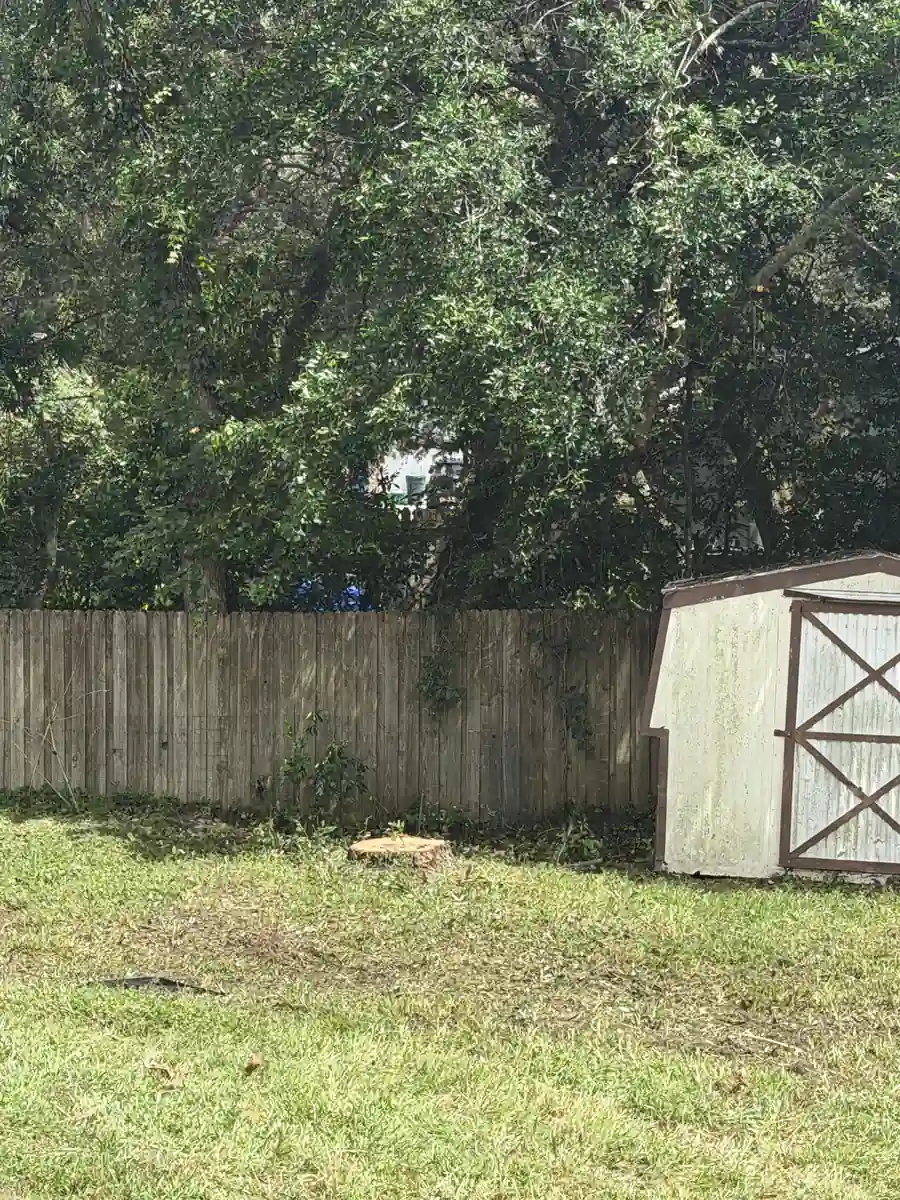
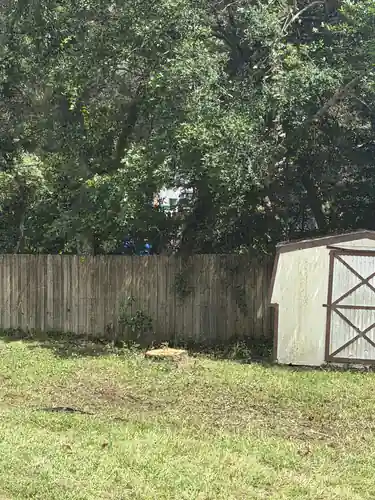
Find out whether the tree needs a permit before you schedule anything. Tree removal in DeLand runs through the city, and size is usually what decides it. The city measures diameter at breast height, four and a half feet up the trunk, and a protected or specimen tree gets reviewed before any removal is approved. Replanting requirements can come attached to that approval, and that is the part homeowners almost never budget for. We would rather walk somebody through it standing in the driveway than after the tree is already on the ground. The other thing worth confirming is insurance. Ask for the certificate, not a verbal answer. Here is what the back corner looked like when we pulled out, with open sky above the shed and a strip of lawn the homeowner can finally get a mower through. We photographed the same kind of before and after on a hazardous tree removal at a DeLand home not far from here, and there is plenty more in the rest of our completed projects.
A closer look
Is a tree leaning over your shed, fence, or pool in DeLand?
Call us at (321) 436-1675 for a free look at it, a fully insured removal, and every limb hauled out of the backyard before we leave.