Coastal Front Yard Landscape Design in New Smyrna Beach
What is different about designing a front yard this close to the water?
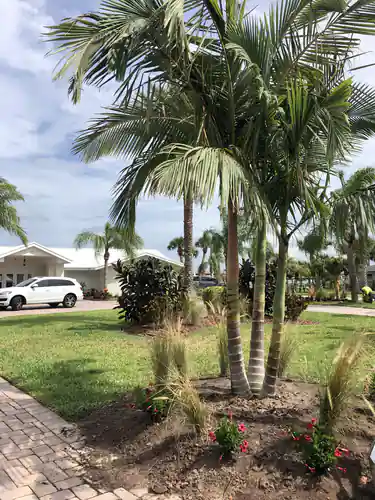
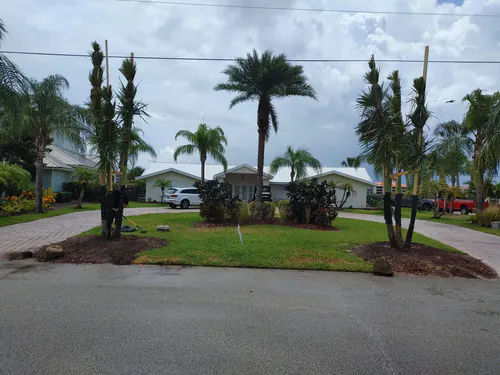
Salt, wind and sand, in that order. New Smyrna Beach sits on the coast, and even a mainland yard a few blocks back gets salt drift on an onshore breeze. Plants that are perfect twenty miles inland brown on the windward side here and never look right again. Sand is the second problem. It drains beautifully and holds almost nothing, so nutrients wash straight through and anything wanting steady moisture is going to need help. Wind is third. Anything tall and stiff gets tested. So a coastal design starts from what survives rather than from what looks good on paper, which is the whole idea behind the right plant, right place approach that UF/IFAS and the state push through Florida Friendly Landscaping. This front yard got the full treatment in one pass: new bed lines, palms, ornamental grasses and a colour layer. The landscape design is the part that happens before anybody picks up a shovel.

Why stage every plant in its pot before digging a hole?
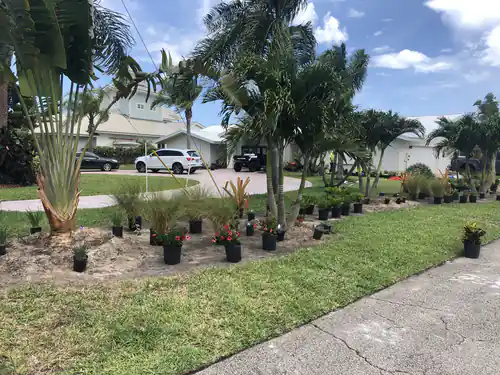
Because a plan on paper lies about spacing. Every plant on this job came off the truck and got stood up in position first, still in its pot, exactly where it was meant to go. Then we walked out to the street. That is the view that matters, and it is remarkable how often a layout that reads well from the driveway looks crowded or lopsided from the road. Pots get slid a foot here, swapped there, and grasses that were going in a straight line end up staggered instead. Five minutes of that saves replanting later. You can see it in the photos, the whole bed staged in black nursery pots with the palms already in their holes, because the palms go first and everything else gets arranged around them. It also gives the homeowner a chance to react before anything is permanent. Nobody reads a planting plan. Everybody understands a yard full of pots.

Which palms and plants actually take the salt here?
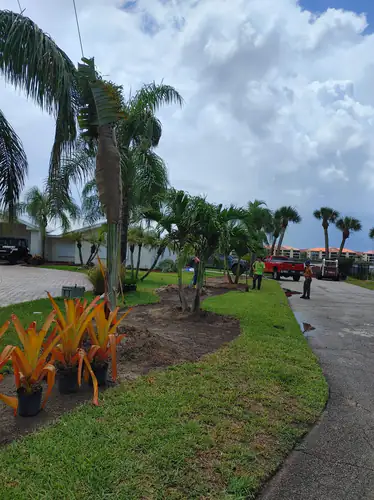
Christmas palms, muhly grass and bromeliads carried most of this one. The clustered palms are Adonidia, which stay small enough for a front yard and handle coastal conditions better than most of the ornamental palms people ask for by name. Muhly grass is the native and it earns its place twice, because it is genuinely salt tolerant, it asks nothing of you, and it throws a pink haze of seed heads every autumn that no shrub can match. The orange bromeliads are Aechmea blanchetiana, which you see across coastal Volusia County for good reason. Full sun, salt tolerant, and the colour holds all year without a single bloom. White bird of paradise went in along the back for height and structure, with pentas at the front for flowers and pollinators. That is the whole palette. Nothing exotic, nothing hard to source, and every one of them replaceable at a decent central Florida nursery. Roeling Green Lawns has been planting the same list along this coast since 2007.

Does landscape fabric belong under the mulch?
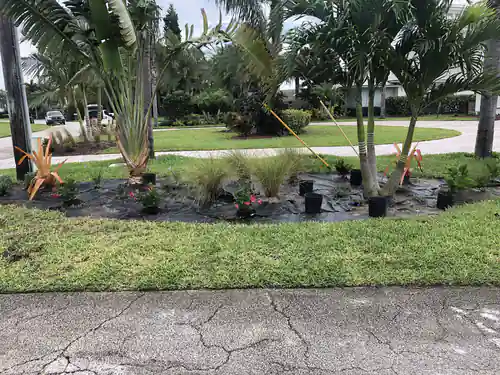
Honest answer: it helps at the edges and it is not a weed cure. We ran fabric across this bed because it holds a clean line along the driveway and the street edge and keeps mulch out of the grass on a windy site. What it will not do is keep the bed weed free for years. Mulch breaks down into soil on top of the fabric, weeds germinate in that layer, and their roots grow down into the weave until pulling one takes the fabric up with it. Anybody telling you fabric ends weeding has not maintained a bed five years later. What actually keeps this bed clean is a decent depth of mulch, a defined edge and somebody walking it every few weeks. We keep mulch around two to three inches deep and pulled back off the stems and palm trunks, because piling it against a trunk traps moisture exactly where you least want it. That part is not negotiable on any landscaping and irrigation job we run.
How long before a new bed looks like the photo?
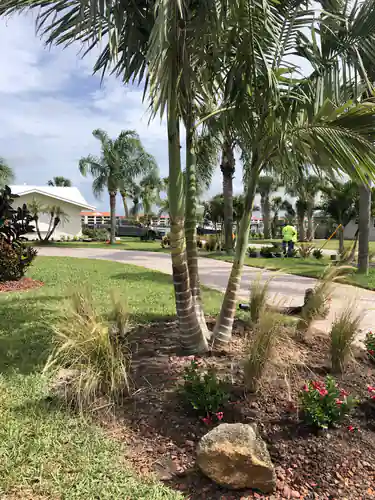
About one growing season for the grasses and colour, two or three years for the palms. Central Florida is forgiving that way. The muhly and the pentas close their spacing by the end of the first summer, and the bromeliads pup and spread from the base with no help at all. Palms are the slow part, and the gaps between them are meant to look slightly empty on day one, because a bed planted to look full immediately is a bed that will be overgrown within three years. Watering is the whole game for the first month. New plants in beach sand need consistent water at the root ball, not a light sprinkle across the mulch, and establishment is where most new landscapes are won or lost. We tell homeowners the same thing every time. If you only do one thing right, water it properly for thirty days. There is a very different job nearby in the tree removal in New Smyrna Beach, and more in our completed projects.
A closer look
Ready to give your New Smyrna Beach front yard a proper plan?
Call us at (321) 436-1675 for a free walk through, a plant list built for salt and sand, and a bed installed in a single day.