Citra Blue Sod Installation in Victoria Park, DeLand
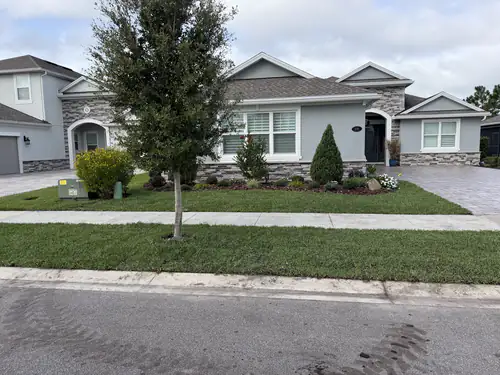
Can a brown St. Augustine lawn come back, or does it need new sod?
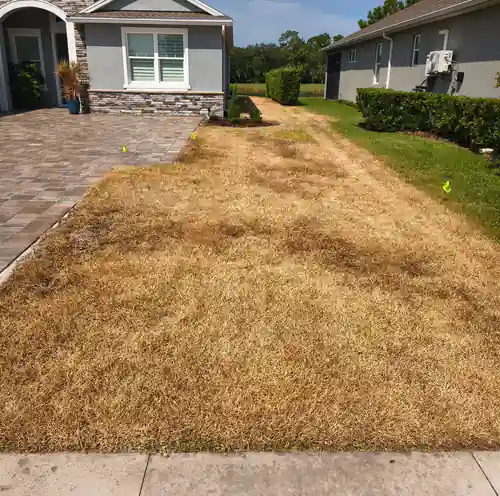
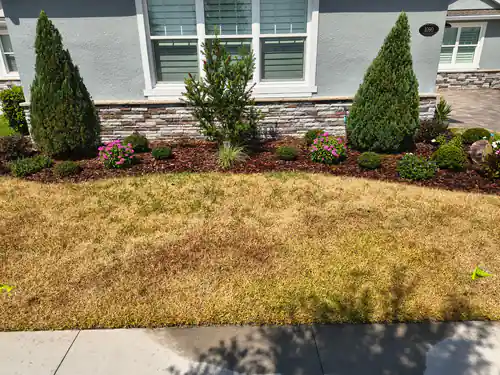
If the runners are dead, it needs new sod. Brown blades mean very little on their own. St. Augustine goes off color in a drought and greens back up once it gets water, provided the stolons running across the soil are still alive. So the test is simple: pull up a runner and look at the nodes. Green and firm means wait and water. Dry and brittle means the lawn is finished, and this Victoria Park front yard was finished. It was straw colored from the public sidewalk to the front walk, including the strip beside the neighbor's hedge. St. Augustine also cannot be reseeded. It spreads by runners and gets planted as sod or plugs, so plugging a yard this size would mean a year of looking at bare sand between the plugs. The owner wanted the lawn back this season. At Roeling Green Lawns, the honest answer is to strip it and start over.
How do you remove a dead lawn without tearing up the rest of the yard?
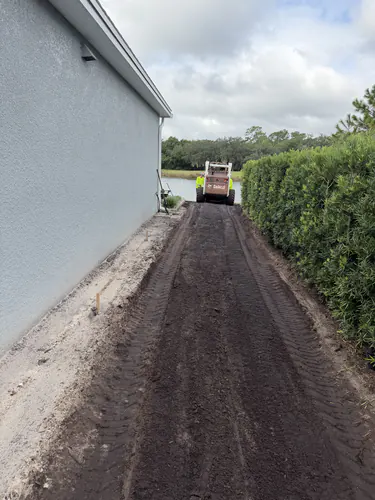
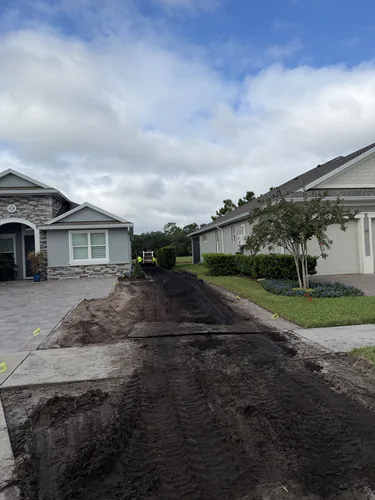
You use a machine that spreads its weight and a crew that knows where everything is buried. The dead turf came off with a compact track loader. Rubber tracks spread the load far better than tires, which matters on a lot like this one with finished pavers, planting beds, and a sprinkler system that was staying put. The small flags you can see in the before photos marked the heads so the blade stayed clear of them. The tight spot was the side yard. There's barely a machine's width between the stucco wall and the neighbor's hedge, and the photo shows the tracks running the whole length of it with the wall untouched. Once the old turf was off, the crew worked the sand back to one even grade with every sprinkler head sitting at the right height for the new sod installation. That grade is what decides whether the finished lawn mows flat or scalps in stripes.
Why choose Citra Blue sod instead of Floratam?
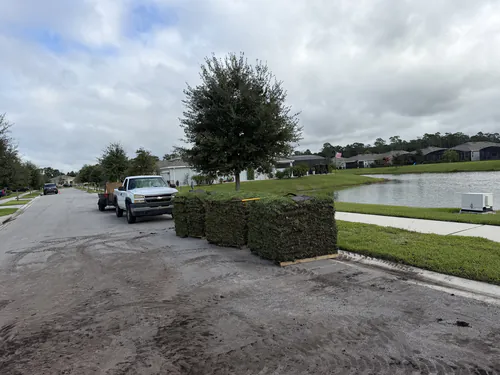
Mostly for the color and for the way it handles partial shade. Citra Blue, sold as CitraBlue, is a St. Augustine cultivar developed through the University of Florida. It has a deeper blue green color than Floratam and a finer, more compact look once it fills in. Floratam is still the workhorse in Volusia County yards, and it's a solid grass in full sun, but it thins quickly under trees and along the shady side of a house. This lot has both, with young oaks in the front and a side yard that loses the sun by early afternoon. It's still St. Augustine, though, so it wants irrigation and it won't forgive a broken zone any more than Floratam does. If you're weighing bahia against St. Augustine instead, our front yard sod installation in DeLand covers that choice. The pallets went down at the curb that morning, because sod starts heating on the pallet from the moment it's cut.
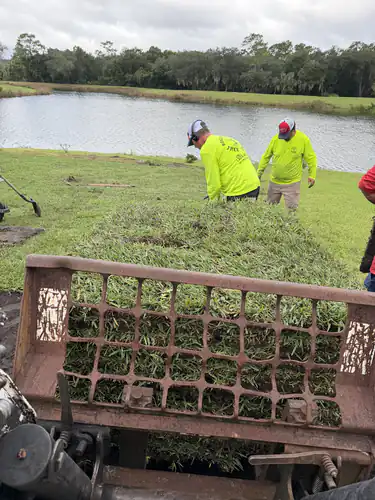
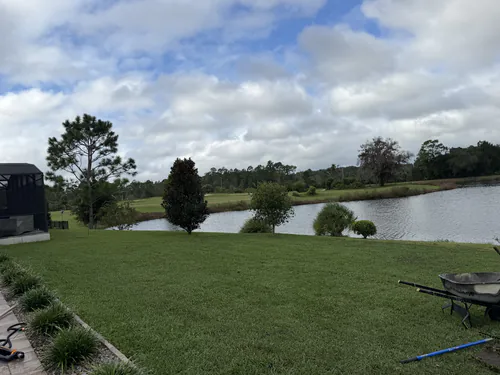
What changes when the lawn runs down to a pond?
The logistics and the fertilizer both change. Victoria Park is built around stormwater ponds, and this backyard rolls straight down to one. The pallets were at the street, so the loader carried the sod around the house a bucket at a time and the crew laid it straight off the bucket. That kept heavy pallets and foot traffic off the grade they'd just finished. Near the bank, the lawn follows the natural slope toward the water rather than getting forced flat, and seams run across that slope so water can't start a channel down a joint. Fertilizer is the part homeowners don't expect. Volusia County's fertilizer rules include a buffer along the water's edge where fertilizer isn't allowed and a summer rainy season stretch when nitrogen and phosphorus can't go down at all. New sod doesn't need feeding in its first several weeks anyway. After that, keeping a lakefront lawn fed legally is part of ordinary landscaping and irrigation work.
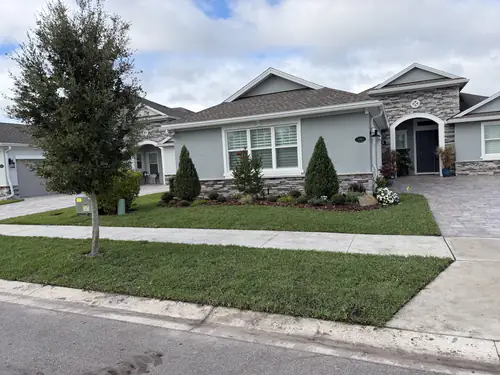
How should you care for new Citra Blue sod in the first month?
Keep it wet and keep off it until it roots. For the first ten days or so, the sod sits on the sand without holding onto it. Every piece lives on whatever water reaches it from above, and a seam that dries out for even one hot afternoon curls up at the edges and turns brown before anyone notices. Early morning watering works best. Aim to keep the pads moist, not standing in puddles. After two weeks, tug a corner. If it resists, the roots are reaching down and you can start stretching the time between waterings. First mowing comes after that, set high, because St. Augustine cut short in a Florida summer stresses fast and invites the same trouble that killed the old lawn. Use the establishment watering allowance for new sod under the St. Johns River Water Management District rules, then drop back to the normal schedule. This front yard, the right of way strip along the street, and the lakefront backyard all went in together. More jobs like it are in our completed projects.
The job, start to finish
Is your DeLand lawn brown and not coming back?
Call us at (321) 436-1675 for a free look at your yard, an honest answer on whether it can be saved, and new sod laid the day it arrives.